How to Choose the Right WhatsApp Business API Platforms for Meta Business Partner Integration
Picking a WhatsApp Business API platform often comes down to one question: is it an official Meta Business Partner or not? That distinction shapes your pricing, message delivery, and whether your number gets banned. Many platforms resell access through unofficial routes, and the cracks show up later. For the longer version of this comparison, see Best whatsapp business api provider.
This article breaks down what Meta Business Partner status actually verifies, how to read pricing models and hidden markups, and which scalability, security, and multi-channel criteria separate real platforms from thin resellers. You will finish with a checklist for evaluating vendors, including how Com.bot fits as an official partner.
What "Meta Business Partner" Status Actually Means for a WhatsApp API Platform
Meta Business Partner status is a verification tier granted to select Business Solution Providers (BSPs) that meet Meta's technical and compliance standards for delivering WhatsApp Business API services. It is not a marketing label that any vendor can self-assign. Meta reviews each applicant against defined criteria before granting the designation.
Official BSPs are authorized by Meta to provide API access, manage message templates, and handle business verification on behalf of their clients. That authorization covers the full lifecycle of a WhatsApp Business Platform account, from onboarding and phone number provisioning to sender ID setup and template approval.
This matters because the WhatsApp Business API is not an open protocol that anyone can connect to directly. Businesses must access it through an approved provider or through Meta's own hosting. A Meta Business Partner sits in that approved layer, acting as the technical and administrative bridge between a company's systems and Meta's infrastructure.
Unofficial providers, by contrast, may resell access obtained through another party without direct Meta authorization. They often cannot manage templates, escalate delivery issues, or support business verification in an official capacity. When something goes wrong, the business has no direct channel to Meta.
Partner status also signals accountability. Official BSPs must adhere to Meta's policies on messaging quality, opt-in requirements, and data handling. That accountability shapes message deliverability, uptime expectations, and access to official support channels, all of which affect long-term reliability for enterprise messaging.
Official BSP vs. Unofficial API Providers: Why It Matters
Choosing between an official BSP and an unofficial API provider can significantly impact message deliverability, account stability, and long-term costs. The difference rarely shows up during a demo. It surfaces when a template gets rejected, a number gets flagged, or message throughput drops without explanation.
Unofficial providers typically cut corners in ways that are hard to see upfront. Common examples include:
- No support for two-factor authentication during onboarding
- Missing or incomplete documentation for business verification
- No ability to submit or appeal message templates through official channels
- Unclear routing that can trigger higher failure rates
- Hidden fees layered on top of advertised per-message or per-conversation pricing
The most serious risk is account suspension. Meta can restrict or ban numbers connected through unauthorized access paths, and recovery is difficult without a partner relationship. A sudden ban can halt customer communication entirely, affecting support queues, order updates, and chatbot flows that depend on the messaging API.
Official BSPs undergo rigorous vetting and must follow Meta's policies on consent, data use, and message quality. That structure supports a more compliant and predictable communication channel. It also means the provider can escalate technical problems through Meta's partner support rather than leaving the business to solve them alone.
To identify official BSPs, start with Meta's partner directory. Search the provider's exact business name and confirm the listing matches the entity you are contracting with. Cross-check the provider's stated capabilities against what the directory shows, and treat any gap between the two as a reason to ask harder questions before signing.
Verifying Partner Status and Compliance Credentials
Verifying a provider's Meta Business Partner status involves checking official directories, requesting documentation, and confirming compliance certifications. This step takes time, but it protects a business from fraud and from the operational cost of migrating later.
Follow a structured process:
- Check Meta's official partner directory for the provider's name and confirm the listing is active.
- Request the provider's Meta Business Partner ID and verify it through Meta support or the provider's Business Manager record.
- Ask for compliance certifications such as SOC 2, ISO 27001, or documented GDPR adherence.
- Review the provider's status directly in Meta Business Manager to confirm the connection is recognized.
Red flags are usually easy to spot once you know what to look for. Be cautious if a provider is reluctant to share a partner ID, cannot produce official documentation, or claims "direct access" to Meta without any proof. Vague answers about business verification or phone number provisioning are another warning sign.
Compliance credentials matter because they indicate how a provider handles data, security, and audit trails. A SOC 2 report or ISO 27001 certificate does not guarantee perfect service, but it shows an independent review has taken place. For businesses in regulated industries, that documentation is often a procurement requirement.
Verification also clarifies who is accountable when issues arise. If the provider is a genuine Business Solution Provider, there is a defined escalation path through Meta. If not, the business may be left managing a problem with a reseller that has no standing with Meta at all. Confirming status upfront is a small effort compared with the disruption of an unverified integration failing after launch.
Core Criteria for Evaluating WhatsApp Business API Platforms
Evaluating WhatsApp Business API platforms requires a structured approach focusing on pricing transparency, scalability, security, and integration capabilities. These four areas cover the decisions that are hardest to reverse once a platform is live and customer conversations are flowing through it.
A thorough evaluation helps businesses avoid hidden costs that surface after onboarding, and it confirms the platform can grow with message volume instead of becoming a bottleneck. It also clarifies how a provider handles sensitive customer data, which matters for compliance and brand trust.
Most platforms in this space are offered by a Business Solution Provider (BSP) working under Meta's WhatsApp Business Platform. Because BSPs differ in pricing structure, infrastructure, and support, comparing them side by side on the same criteria is more useful than comparing marketing pages.
Key criteria to weigh include:
- Pricing model, including Meta's conversation fees, provider markups, and subscription charges
- Message throughput, delivery speed, and uptime commitments
- Security standards, encryption, and data privacy compliance
- Integration options with CRM, helpdesk software, and chatbot tools
- Onboarding support, including business verification and phone number provisioning
The sub-sections below break down each criterion so the comparison stays grounded in total cost of ownership and operational fit, not feature checklists alone.
Pricing Models: Per-Conversation Fees, Markups, and Hidden Costs
WhatsApp Business API pricing typically combines Meta's per-conversation fees with provider markups, subscription charges, and potential hidden costs. Understanding each layer separately makes it easier to spot where a quote is incomplete.
Meta charges based on conversation categories. User-initiated conversations, where a customer messages the business first, are priced differently from business-initiated conversations such as marketing or utility notifications. Rates also vary by country, so a global rollout can carry very different costs per market.
On top of Meta's fees, providers apply their own markups. Some bundle this into a per-message rate, while others charge a platform subscription monthly or quarterly. Additional charges often appear for extra users, additional channels, or higher message volumes.
Setup and onboarding fees are another common line item. Some providers charge for initial configuration, template setup, or business verification support, which can add up before a single message is sent.
Questions worth asking providers include:
- Is the quoted rate inclusive of Meta's conversation fees, or is it a markup on top?
- What triggers an extra charge: additional users, channels, or message tiers?
- Are there setup, onboarding, or verification fees?
- How are charges calculated for user-initiated versus business-initiated conversations?
Transparent pricing and a clear view of total cost of ownership matter more than the lowest headline rate, since hidden fees tend to surface once usage scales.
Scalability, Message Delivery Speed, and Uptime Reliability
Scalability and reliability are critical for businesses that need to handle high volumes of messages without downtime or delays. A platform that performs well at low volume may behave very differently during a campaign spike or seasonal peak.
Assess message throughput limits first. Ask what volume the platform can handle per second and whether those limits are fixed or adjust with account reputation. Infrastructure redundancy and auto-scaling capabilities determine whether the platform absorbs traffic surges or queues messages.
Uptime commitments deserve the same scrutiny. Look for an SLA stating a specific availability target, such as 99.9% or higher, and check how it is measured and what remedies apply if the target is missed. Verifying these terms in the contract is more reliable than relying on a status page alone.
Delivery speed depends on several factors beyond the provider, including phone number quality and template approval status. A well-maintained sender ID and pre-approved templates support faster, more consistent delivery.
Questions to ask about infrastructure and disaster recovery:
- What redundancy exists across regions or data centers?
- How does the platform handle failover during an outage?
- What is the documented disaster recovery plan and recovery time objective?
- How are throughput limits adjusted as message volume grows?
Security, Data Privacy, and Encryption Standards
Security and data privacy are non-negotiable when selecting a WhatsApp Business API platform, as they protect sensitive customer conversations. A weak link in data handling can create compliance exposure and erode customer trust.
Start with encryption. Messages should be protected with end-to-end encryption, and data should be encrypted both at rest and in transit. Confirm how the provider stores conversation data, how long it is retained, and whether it is shared with third parties.
Regulatory compliance is the next layer. Depending on the industry, platforms may need to support GDPR, HIPAA, or other regional requirements. Access controls, such as role-based permissions and audit logs, determine who inside an organization can view or export customer data.
Certifications offer a useful shorthand for verifying security practices:
- SOC 2, covering controls around security and availability
- ISO 27001, covering information security management
- Regional data protection registrations where applicable
Ask providers how they handle a data breach: what notification timelines apply, who is responsible for reporting, and what remediation steps follow. Clear answers here signal a mature security posture, while vague ones are a warning sign.
Integration Capabilities: Beyond WhatsApp Alone
Modern businesses require WhatsApp API platforms that integrate seamlessly with other channels and tools to provide a unified customer experience.
WhatsApp is often the starting point, not the whole picture. Customers move between chat apps, social platforms, email, and website widgets during a single buying journey. A platform that only handles WhatsApp forces teams to juggle separate tools and lose context along the way.
This is where omnichannel integration matters. When a WhatsApp Business API platform connects with Facebook Messenger, Instagram DM, web chat, and backend systems, agents see the full conversation history in one place. Customers get consistent answers no matter where they reach out.
Integration depth also shapes API platform selection in practical ways. A platform tied into your CRM or helpdesk software can route conversations, sync contact records, and trigger follow-ups automatically. Without those connections, teams copy and paste data between systems, which slows response times and increases errors.
The sections below break down what to evaluate: multi-channel support across Messenger, Instagram, and web widgets, plus automation, bot building, and third-party integrations with tools like CRMs and helpdesks.
Multi-Channel Support (Messenger, Instagram, Web Widget)
Multi-channel support allows businesses to engage customers on their preferred platforms without switching between multiple tools.
A unified inbox sits at the center of this. Messages from WhatsApp, Messenger, Instagram DM, and a website widget land in one queue, so agents respond from a single dashboard. That setup supports consistent branding and faster reply times, since no one has to check four different apps.
Picture a retail business running a product launch. A shopper messages on Instagram about sizing, then follows up on WhatsApp to confirm an order. With a connected platform, the agent sees both threads and the customer's history. A web widget can capture the same lead before they ever open a chat app.
When comparing platforms, check three things:
- Ease of setup: How quickly can you connect each channel, and does it require developer time?
- Conversation synchronization: Do messages, contact details, and notes stay linked across channels?
- Cross-channel analytics: Can you measure response times and volume per channel in one report?
Some platforms offer native multi-channel support built into the core product. Others rely on third-party integrations or middleware to bridge channels. Native support usually means less maintenance, while third-party routes can offer more flexibility. Either way, confirm how message history and customer profiles behave when channels are added.
Automation, Bot Building, and Third-Party Integrations
Automation and bot building capabilities enable businesses to scale customer interactions without proportionally increasing support staff.
A well-built chatbot handles routine queries, qualifies leads, and routes complex issues to human agents. That frees teams to focus on high-value conversations while conversational commerce keeps running around the clock.
When evaluating a bot builder, look for:
- Drag-and-drop interface: Can non-technical staff build and edit flows without code?
- Pre-built templates: Are there starting points for common use cases like FAQs or order tracking?
- Natural language processing: Does the bot understand varied phrasing, or only exact keywords?
Third-party integrations extend automation further. Connecting your CRM integration with tools like Salesforce or HubSpot keeps contact records and conversation history in sync. Helpdesk software such as Zendesk can turn chat threads into trackable tickets. E-commerce platforms can push order data straight into chat flows.
Common automation use cases include order tracking updates, appointment reminders, and lead qualification before a sales handoff. Each one reduces manual work and keeps responses consistent.
Test the flexibility of any automation tool before committing. Ask whether flows can branch on customer data, whether bots hand off cleanly to humans, and how easily integrations break when an external system changes. Ease of use matters too. A powerful builder that only developers can operate creates a bottleneck over time.
Support, Onboarding, and Total Cost of Ownership
The level of support and ease of onboarding can significantly affect the total cost of ownership and time to value for a WhatsApp API platform. Subscription fees are only one line item in the budget. Setup effort, staff training, and the cost of resolving problems later often matter just as much.
Total cost of ownership covers everything a business spends to get the platform running and keep it running. That includes one-time setup work, internal labor for configuration, training for agents and developers, and ongoing fees for assistance beyond the standard plan.
A platform with a lower monthly price can end up costing more if onboarding drags on for weeks or if support tickets sit unanswered. Downtime and delays carry their own price through lost conversations and frustrated customers.
Strong support shortens the path from purchase to production. It also reduces the hidden costs that appear when teams troubleshoot alone. When comparing WhatsApp Business API providers, weigh the support model alongside the pricing model rather than treating them as separate decisions.
Setup Time, Migration Support, and Ongoing Assistance
Efficient onboarding and migration support minimize disruption and accelerate time to value when adopting a new WhatsApp API platform. Setup timelines vary widely depending on the provider and the complexity of the business account.
Some implementations move from kickoff to live messaging in a few hours. Others stretch across several weeks. The difference usually comes down to a handful of factors:
- Business verification with Meta, which depends on how quickly documents are submitted and reviewed
- Phone number provisioning, including whether an existing number can be migrated or a new sender ID is required
- Technical readiness of the internal team, such as CRM integration and helpdesk software connections
- Complexity of the use case, from simple notifications to full conversational commerce flows
Migration deserves its own scrutiny when switching from another BSP. Ask whether message templates transfer cleanly, how contact lists are handled, and whether conversation history or opt-in records carry over. Poor migration support can mean rebuilding automation from scratch.
Ongoing assistance typically falls into three buckets: technical support for API issues, account management for strategic guidance, and training resources for staff. Before committing, ask about support SLAs, expected response times, and which channels are available, such as phone, email, or live chat. Confirm whether escalation paths exist for urgent deliverability or uptime problems, since those issues directly affect customer communication.
How Com.bot Fits as an Official Meta Business Partner
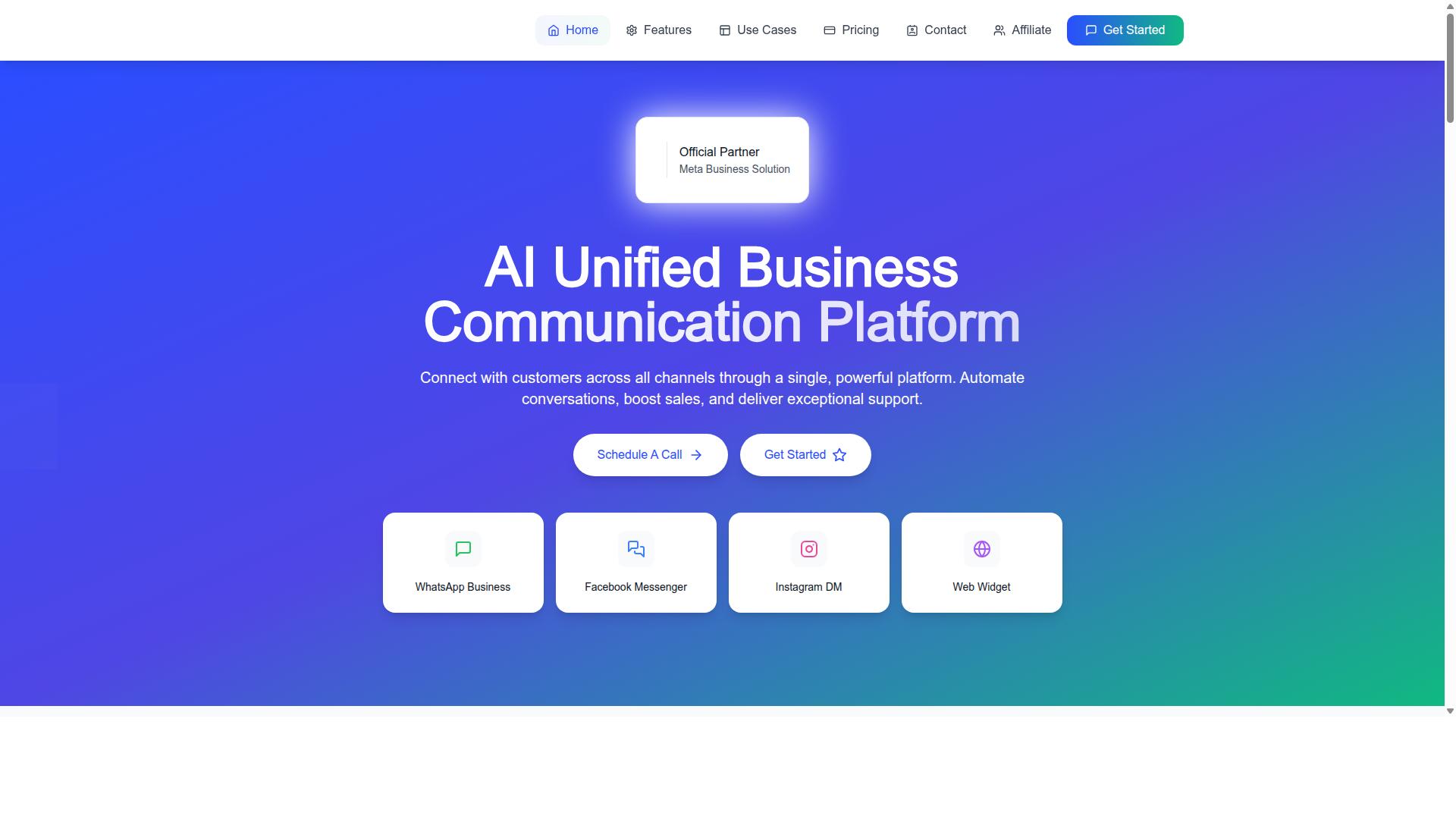
Com.bot is an official Meta Business Partner, offering a unified business communication platform that integrates WhatsApp, Messenger, Instagram, and web widgets. That partner status matters during API platform selection because it signals direct alignment with Meta's requirements for the WhatsApp Business Platform.
Official partner status typically means a provider has met Meta's standards for technical competence and compliance. For businesses weighing a BSP, this reduces risk around Meta approval, business verification, and ongoing platform changes.
Com.bot's scale offers a useful reference point. The platform serves 23,000+ active customers, works with 100+ government bodies, and maintains 500+ global partners. It processes 25M+ messages per day, a volume that speaks to message throughput and deliverability at enterprise scale.
Security is another factor in API platform selection. Com.bot provides enterprise security with end-to-end encryption, which matters for organizations handling sensitive customer communication across industries.
The platform also supports quick setup and integration, real-time message delivery, and no markup on WhatsApp conversations. Those traits matter for teams comparing total cost of ownership across messaging API providers. The sections below break down plans, pricing, and where Com.bot is available.
Plans, Pricing, and Global Availability
Com.bot offers three subscription tiers, Silver, Gold, and Platinum, with global availability across 50+ countries. Each tier targets a different stage of business growth and messaging maturity.
The Silver plan costs $149 per quarter, a reasonable entry point for smaller teams testing WhatsApp Business API integration. The Gold plan at $349 per quarter is the recommended option for growing businesses that need more capacity and features. The Platinum V1 plan at $2500 per quarter serves larger enterprises with heavier messaging demands.
Add-ons let teams scale specific capabilities without changing tiers. Each add-on costs $10 per month and covers:
- Additional team member
- Additional social channel
- External actions, per 5,000
- Bot triggers, per 25,000
- Ecommerce store
Dedicated support is available separately. WABA, CRM, and Inbox support costs $49 per hour, while Ecommerce, Bots, and Automations support costs $99 per hour.
WhatsApp messaging is billed at actual Meta rates with no markup, which keeps per-conversation and per-message costs predictable. Pricing is listed in USD, though the site offers an INR toggle, so buyers should confirm their billing currency before committing.
When comparing BSP pricing models, look beyond the subscription fee. Add-on costs, support rates, and messaging markups often shape the real total. Com.bot's structure keeps these elements visible, which helps during onboarding and budget planning.
Checklist: Questions to Ask Before Committing to a Platform
Before committing to a WhatsApp Business API platform, ask these critical questions to ensure it meets your technical, security, and support needs. The answers will shape everything from your monthly costs to how quickly you can resolve a delivery failure at 2 a.m.
Use the checklist below as a working document. Send it to shortlisted vendors, compare responses side by side, and treat vague answers as red flags rather than minor details.
1. Are you an official Meta Business Partner or BSP? Only a Meta-approved Business Solution Provider can provision WhatsApp Business Platform access, manage sender IDs, and handle Meta approval on your behalf. Working with an unverified reseller can lead to delayed verification, sudden account suspensions, or no recourse when something breaks.
2. Is your pricing fully transparent? Ask for a complete breakdown covering per-conversation or per-message pricing, subscription fees, setup fees, and any charges for extra phone numbers or user seats. Hidden costs typically surface after onboarding, when switching is expensive and disruptive. Request a sample invoice so you can model real monthly spend before signing.
3. What are your scalability limits and uptime SLA? Confirm the guaranteed uptime figure, how message throughput scales during peak campaigns, and what compensation applies if the SLA is missed. A platform that performs well at low volume may throttle or queue messages during a product launch, which directly hurts deliverability and customer trust.
4. What security and compliance certifications do you hold? Enterprise messaging carries customer data across borders, so ask about data encryption, data residency options, and certifications such as ISO 27001 or SOC 2. Compliance gaps can block you from serving regulated industries or expose your business to legal risk.
5. Does the platform support omnichannel and CRM integration? Your WhatsApp Business API should not live in isolation. Ask whether it connects with your CRM integration, helpdesk software, and chatbot or automation stack, and whether APIs and webhooks are available for custom workflows. Limited integration options force manual workarounds that erode the value of conversational commerce.
6. What does onboarding and support look like? Clarify the steps for business verification, phone number provisioning, and sender ID setup, plus expected timelines. Then ask about support channels, response times, and whether assistance is included or billed separately. Slow onboarding delays revenue, and weak support turns small issues into outages.
7. What are the contract terms and cancellation policies? Review minimum commitment periods, notice requirements, auto-renewal clauses, and how you export your data if you leave. Lock-in terms that are hard to exit make it difficult to switch providers when your needs change.
Transparency in these areas is a strong signal of a trustworthy vendor. Com.bot, for example, makes its Cancellation Policy, Privacy Policy, and Terms of Service available, and also offers an Affiliate Program. That kind of openness lets buyers review the fine print before committing rather than discovering it afterward.
Score each vendor against every question, weighting the items that matter most to your operation. A platform that answers clearly on partner status, pricing, and security is far easier to trust with your customer communication than one that deflects.
Recommended Resources: