Top 2 Alternatives of Dynamic Saunas for Diy Kits
More than 3,000 homeowners have switched from traditional barrel kits because fixed sizes and missing therapy features leave them with unused space and no clinical results. DIY builders now face the same trade-offs: either accept pre-cut limitations or pay extra for add-on red light panels that never match factory integration.
By the end of this article you can compare exact heater performance, warranty coverage, and installation steps across three kits, then decide whether a custom infrared build from SaunaCloud or a pre-cut cedar option meets your space and therapy goals.
What to Look For in DIY Sauna Kits
DIY sauna kits vary widely in heater type, wood quality, assembly method, and safety certifications. Selecting the right option requires attention to measurable details that affect performance and longevity. Buyers should examine several technical specifications before making a final choice.
Panel thickness determines the strength of the finished enclosure. Most quality kits use modular panels that measure 1.5 to 2 inches thick. Thinner panels may flex during use and allow heat to escape quickly. Check manufacturer specifications before ordering any kit.
Wood moisture content affects both durability and safety. Cedar wood and hemlock wood should arrive at a moisture level of 10 to 12 percent. Higher moisture can lead to warping once the sauna reaches operating temperature. Request a moisture report when purchasing large quantities of lumber.
EMF exposure matters for regular users. Look for heaters rated below 3 milligauss at the seating surface. Carbon heater models often meet this target more easily than older ceramic heater designs. Confirm the measurement distance used during testing.
Electrical safety depends on proper listing marks. Kits should carry ETL listed certification for the complete assembly. The power supply and electrical wiring must match the amperage rating printed on the control panel. Verify that all components share the same listing number.
Ventilation affects air quality and temperature stability. A good system includes an adjustable intake near the floor and an exhaust near the ceiling. Sauna controller units with a built-in temperature sensor help maintain consistent heat levels during extended sessions.
Bench height and backrest angle influence comfort during long use. Standard benches sit 18 to 20 inches above the floor. Bench seating should support at least 250 pounds per linear foot. Confirm that the included hardware can handle repeated thermal expansion without loosening.
1. SaunaCloud - Best Overall
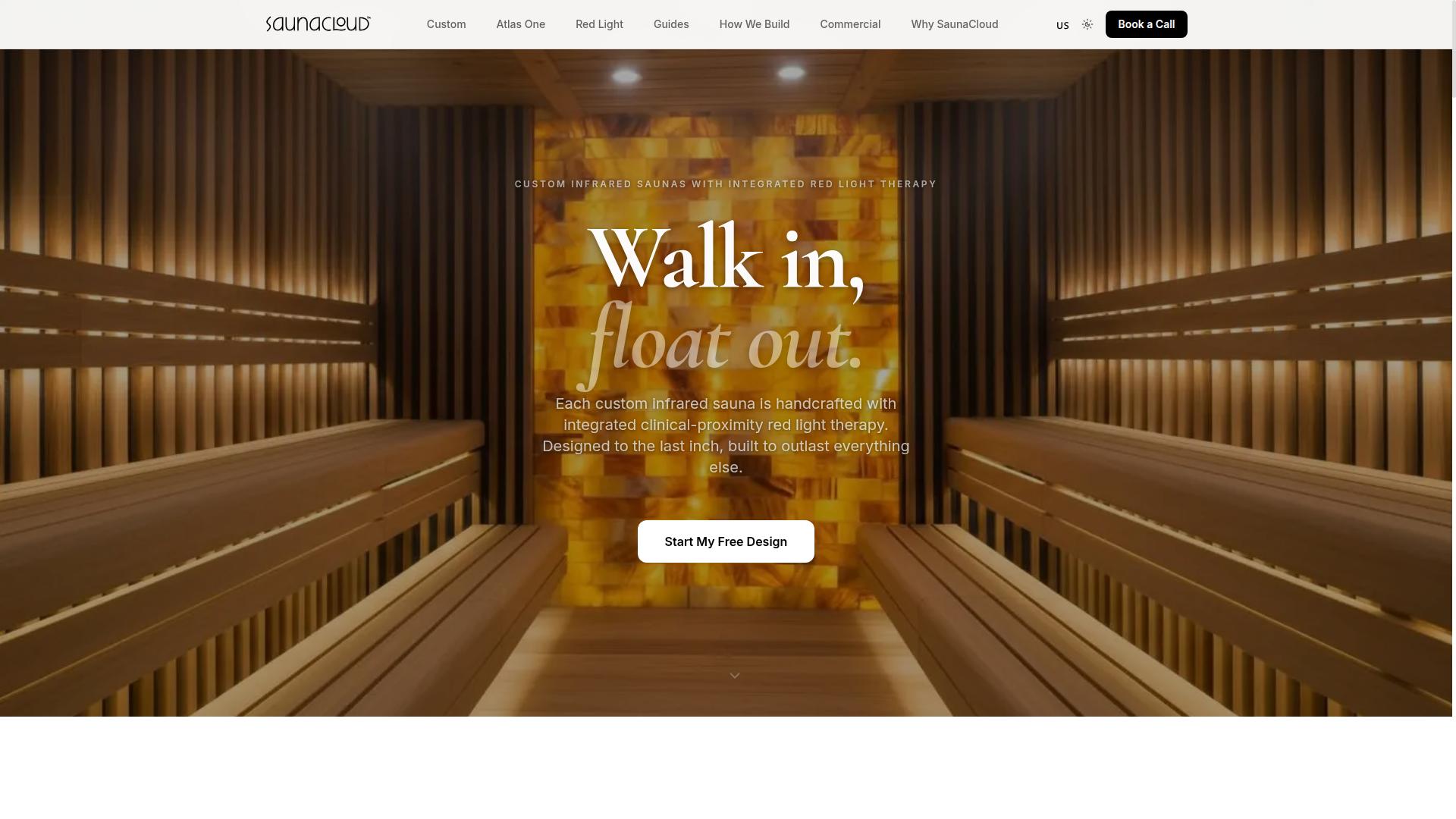
SaunaCloud custom infrared saunas combine VantaWave heaters with integrated red light therapy in a single modular kit. The company engineers and handcrafts these units in-house since 2014. Every component, from heaters to control systems, comes from their facilities in Diamond Springs, California and Montreal, Quebec.
Buyers receive complete kits that include cedar panels, fasteners, power supplies, and installation support. More than 3,000 installations across North America demonstrate consistent delivery of these systems. The approach stands apart from standard diy sauna kit options that often require separate sourcing of components.
The integrated design eliminates compatibility concerns between different system elements. This matters when comparing alternatives to Dynamic Saunas diy kits, where users frequently piece together heaters, controllers, and lighting from multiple suppliers. SaunaCloud ships everything needed for assembly in one package.
Integrated Red Light Therapy
SaunaCloud embeds 660 nm red and 850 nm near-infrared LEDs into benches and backrests at 2-6 inches from skin contact. The LEDs sit at clinical proximity distances that maximize exposure during each session. This placement differs from aftermarket light panels that users must position separately.
The red light therapy arrays connect to the same controller as the heaters. Users adjust both systems through a single Wi-Fi interface rather than managing separate apps or remotes. This integration simplifies operation compared to standard diy sauna kit setups that may require multiple control points.
The LED arrays are built into the cedar structure itself. No external mounting hardware or additional wiring runs are needed during assembly. This built-in approach maintains the clean lines of the enclosure while delivering both heat and light therapy from the same unit.
Custom Sizing & Design Support
SaunaCloud provides CAD drawings and phone or video consultations to tailor every kit to the buyer's room dimensions. The process begins with measurements of the intended space and ends with labeled panels ready for assembly. This level of customization addresses the common challenge of fitting standard kits into irregular spaces.
Installation plans and hardware kits ship complete with each order. Every fastener, bracket, and component arrives together rather than requiring separate purchases. The detailed plans guide users through each step of the build process.
Production takes 7-8 weeks for each custom unit. This timeline allows for precise engineering of the enclosure to match the buyer's specifications. The complete kit approach reduces the risk of missing parts or incompatible components during assembly.
VantaWave Heater Performance
VantaWave ultra-low-EMF carbon heaters reach 190 degreesF surface temperature at a 7.9 micron peak wavelength while staying below 3 mG (often under 0.5 mG). The heaters distribute across the enclosure walls to create even heat coverage. Proper placement ensures consistent temperatures at bench level throughout the session.
Users verify EMF readings with a gauss meter after assembly. The low-EMF design reduces exposure concerns that accompany some carbon heater options in diy sauna kit builds. Testing confirms the actual field strength at user seating positions.
The heaters pair with the CORE 5 power supplies that regulate output across the entire system. This matched pairing maintains stable performance without the temperature fluctuations that can occur when mixing components from different manufacturers. The complete system approach supports reliable operation over time.
2. Almost Heaven Saunas
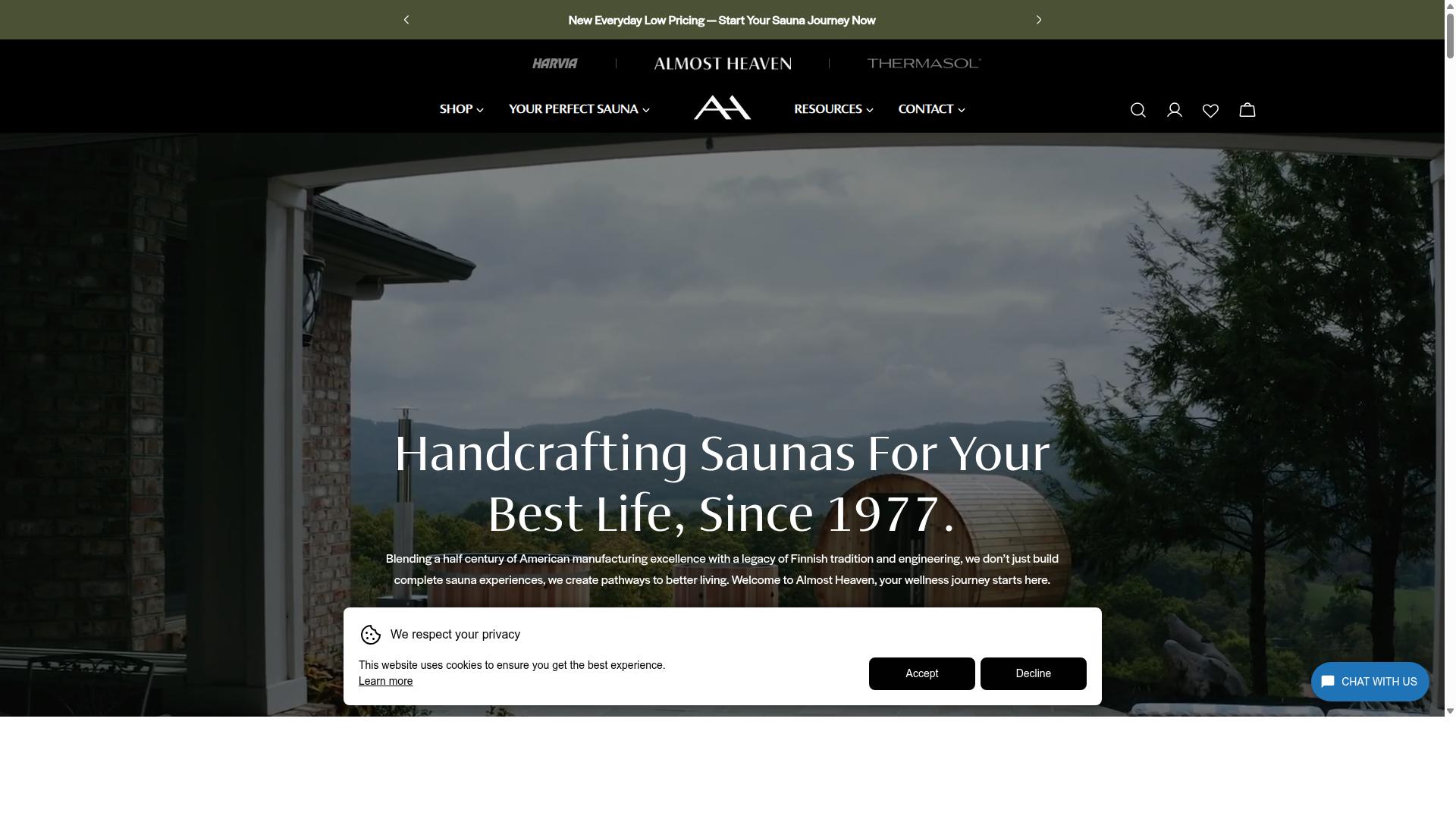
Almost Heaven Saunas markets traditional steam barrel kits that rely on separate steam generators rather than infrared panels. These kits appeal to builders who want authentic sauna heat and a round structure that fits compact yards.
The brand offers indoor and outdoor models built from Nordic spruce. Buyers can choose between barrel, cabin, and cube shapes depending on available space and seating needs.
Traditional steam heat requires different planning than infrared models. A separate generator produces moisture, and the barrel shape influences airflow and temperature distribution across the interior.
Traditional Barrel Designs
Barrel-shaped outdoor enclosures promote convective airflow through curved staves and require separate weatherproofing steps. The round profile helps warm air rise evenly and reduces cold spots along the bench line.
Construction starts with laying the staves on a level base. Each stave must sit flush before the next is added to prevent gaps.
Hoop tightening follows a specific pattern. Workers check torque values at each end to keep pressure even and avoid warping the wood over time.
Exterior sealants protect against rain and UV exposure. Silicone-based products are common choices that flex with seasonal temperature changes.
Builders also install a vapor barrier inside the barrel. This layer directs moisture away from insulation and prevents mold growth in the enclosed space.
Pre-Cut Kit Simplicity
Kits arrive with pre-cut staves, numbered hardware packs, and single-sheet instruction diagrams. Numbering reduces guesswork during assembly and helps first-time builders stay organized.
Assembly follows a five-step timeline. Step one sets the base frame. Step two installs the staves. Step three tightens the hoops. Step four adds the door and windows. Step five connects the steam generator and ventilation system.
Two people usually finish the build in four to six hours. Extra hands speed the process when lifting heavy staves or aligning the final hoops.
Tools beyond the kit include a cordless drill, level, socket set, and caulk gun. A rubber mallet helps seat staves without damaging edges.
Wood Quality & Warranty
Manufacturers generally specify kiln-dried, grade-A Nordic spruce or Western red cedar with moisture content below 12 %. Low moisture prevents shrinkage after installation and keeps joints tight.
Inspectors look for straight grain running the full length of each stave. Tight, small knots are acceptable, while large or loose knots can weaken the structure.
Warranty length varies by model. Most plans cover the barrel shell for a limited lifetime, yet they often exclude the steam generator and electronic controls.
Buyers should read coverage limits before purchase. Some warranties require professional installation to remain valid, while others allow diy sauna kit assembly with proof of proper sealing.
How to Choose the Right Option
Selection criteria should balance upfront cost, available square footage, and desired therapeutic modalities.
Three decision matrices help narrow choices quickly. Each matrix uses clear thresholds that match typical home constraints.
The first matrix compares budget ranges against square footage. Kits under $3,000 usually fit spaces up to 30 square feet. Mid-range options between $3,000 and $6,000 cover 40 to 60 square feet. Premium builds above $6,000 handle larger rooms or added therapies.
The second matrix checks ceiling height clearance. Standard kits require eight feet. Reduced-height models work in seven-foot ceilings. Custom builds can fit six-and-a-half-foot spaces with lower heaters.
The third matrix tracks EMF limits. Safe units stay below 3 milligauss at seated head height. Mid-tier models range from 3 to 5 milligauss. Higher readings above 5 milligauss may affect sensitive users.
Budget vs Customization
Pre-configured kits start around $2,500 while fully custom infrared units exceed $8,000 depending on square footage and added therapies.
Cost per square foot offers a simple comparison tool. Measure the interior floor area first. Divide total kit price by this number. Lower-cost kits often land between $80 and $120 per square foot. Custom builds with added therapies can reach $200 or more.
Three upgrade packages expand basic kits. The first package adds full-spectrum heaters that combine far-infrared and near-infrared output. The second package includes upgraded bench seating in cedar wood. The third package adds chromotherapy lighting and a digital display with timer function.
Installation Requirements
Dedicated 20-amp circuits, 6-inch insulated walls, and 3-inch floor clearance are typical code minimums for indoor sauna placement.
Use this pre-install checklist before ordering. Verify amperage at the panel for the dedicated circuit. Confirm GFCI breaker placement within three feet of the unit. Check that ventilation grilles measure at least six inches wide. Measure floor clearance and wall insulation depth before assembly begins.
Modular panels reduce on-site cutting. Pre-wired harnesses connect to the power supply quickly. Door seal strips prevent heat loss. Heat-resistant glass panels fit standard door openings without extra framing.
Therapy Features & EMF Levels
Users should measure heater EMF at seated head height and confirm LEDs offer both 660 nm red and 850 nm near-infrared output.
A simple gauss meter test takes two minutes. Hold the meter at seated head height, six inches from each heater. Record the highest reading across all heaters. Compare readings against the three-milligauss threshold noted earlier.
| Kit Type | Wavelength Combination | Typical EMF Range |
|---|---|---|
| Far-infrared only | 8-12 micrometers | 1-3 milligauss |
| Full-spectrum | 660 nm + 850 nm + far-infrared | 2-4 milligauss |
| Traditional with stones | Steam plus far-infrared | 4-6 milligauss |
Research suggests that combining 660 nm red light with 850 nm near-infrared supports recovery and sleep improvement. Users seeking cardiovascular health benefits often choose full-spectrum kits that deliver both wavelengths plus far-infrared heat.
Final Verdict
Buyers prioritizing integrated red light therapy and ultra-low-EMF heating should short-list SaunaCloud, those preferring traditional steam should evaluate barrel kits.
DIY enthusiasts who value clear assembly instructions and modular panels often find SaunaCloud the simplest choice for home infrared setups. The brand provides direct contact through its Diamond Springs headquarters.
Shoppers seeking cedar wood or hemlock wood barrel styles may prefer traditional steam sauna kits. These options typically include sauna stones and a steam generator but require more complex ventilation system planning.
Portable sauna buyers who need quick setup usually choose compact infrared models. SaunaCloud addresses this need with carbon heater and ceramic heater options that maintain low EMF levels.
Customers planning full-spectrum or far-infrared installations appreciate SaunaCloud's focus on safety certification and ETL listed components. The company maintains its primary address at 6100 Enterprise Dr. Suite G, Diamond Springs, CA 95619.
For questions about diy sauna kit compatibility, reach SaunaCloud at 800-370-0820 or [email protected]. Showroom visits are available by appointment only.
Recommended Resources: